

Nia Sanjesh Karan
Simplifying Complex Calibration Workflows
Connecting customers and laboratory experts through a structured platform for equipment calibration requests, payments, and results.
- Role
- Product Designer (UX/UI)
- Industry
- Industrial Services & Calibration
- Platform
- Web Application
- Status
- Developed & Live
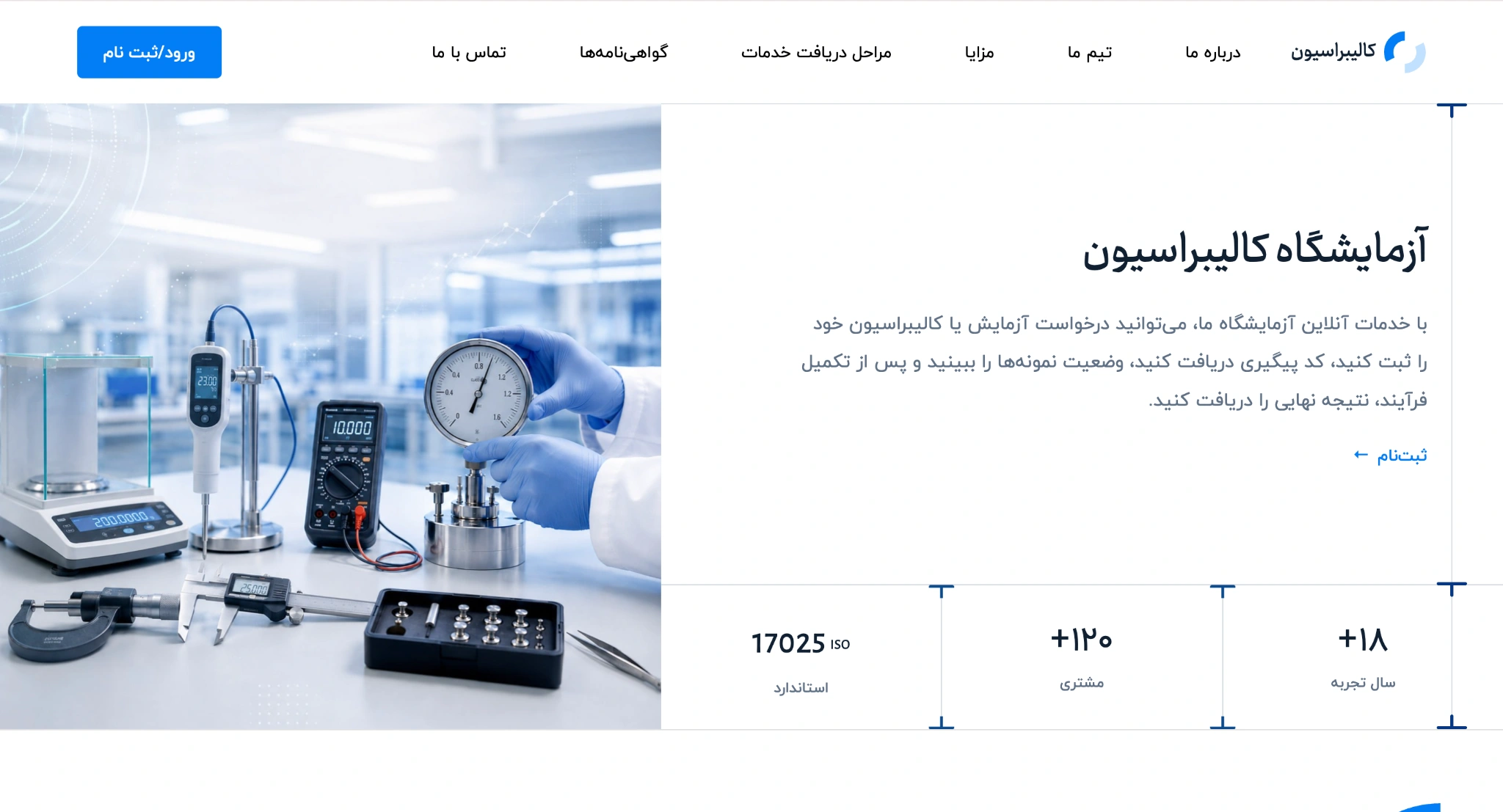
Project Overview
Connecting Customers and Laboratories Through One Platform
Nia Sanjesh Karan is a web-based calibration service platform designed to streamline the process of requesting, managing, and tracking equipment calibration.
The platform connects two distinct user groups: customers who need their equipment calibrated and laboratory experts responsible for reviewing requests, managing equipment, processing payments, and delivering results.
As the Product Designer, I was responsible for UX and UI design, focusing on translating complex technical and operational workflows into a clear, structured, and intuitive digital experience.
The Challenge
One Process, Two Different Perspectives
Calibration is more than submitting equipment for testing. It involves technical specifications, initial assessments, equipment delivery, pricing, multiple payment stages, and access to final reports.
Customers need a simple way to submit requests and understand their progress, while laboratory experts require more detailed controls to manage each stage.
The main challenge was designing two connected experiences that support different responsibilities without making the overall process unnecessarily complicated.
Research & Discovery
Understanding Real-World Workflows
My approach combined research into calibration processes with competitive analysis and exploration of comparable digital platforms.
The focus was on understanding how customers interact with laboratory services, what information experts need to process requests, and where flexibility is essential.
This helped shape a workflow that balances technical accuracy, operational requirements, and ease of use.
Product Architecture
Two Sides, One Connected Experience
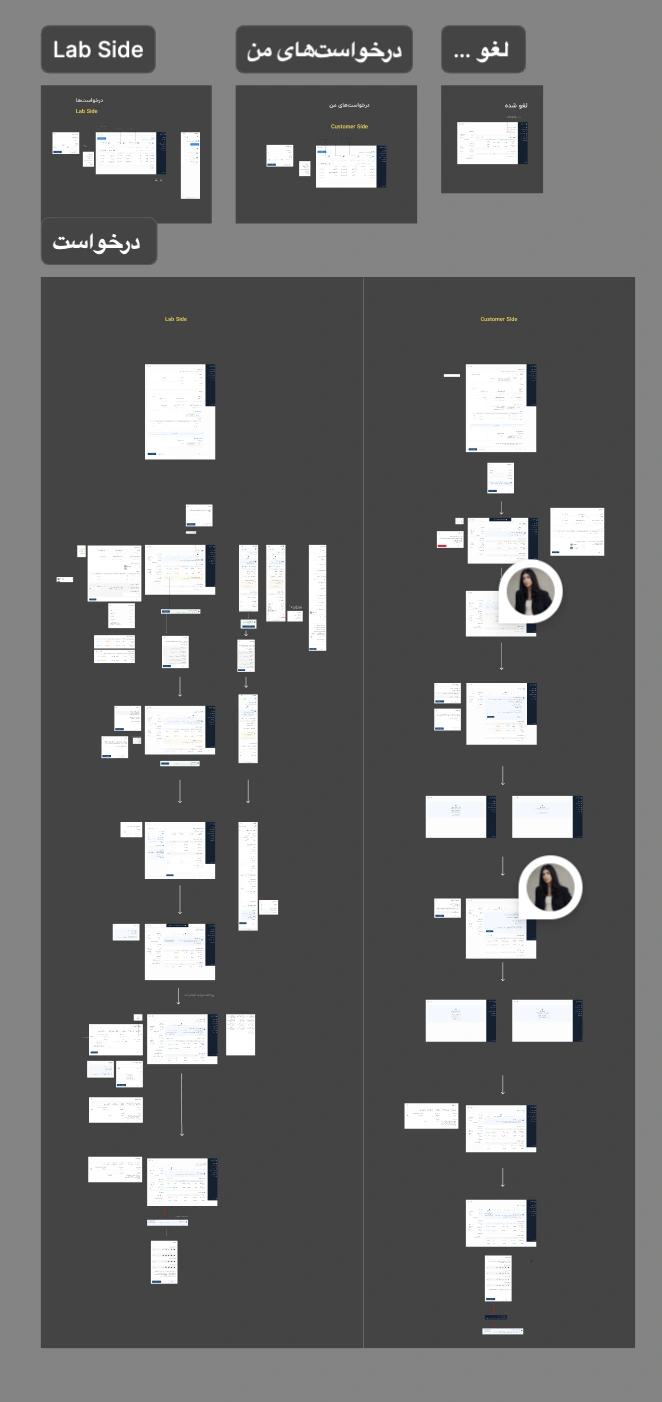
The platform was structured around two distinct interfaces, each tailored to its users’ responsibilities.
Customer Side
A self-service experience that allows customers to submit calibration requests, register multiple pieces of equipment, track progress, manage payments, and access calibration reports and certificates.
Laboratory Side
An operational interface where experts can review requests, evaluate individual equipment, manage acceptance and pricing, record payments, register calibration results, and control access to reports.
Both sides follow the same underlying workflow while presenting relevant information and actions based on each user’s role.
Request Experience
Making Complex Requests Easier to Complete
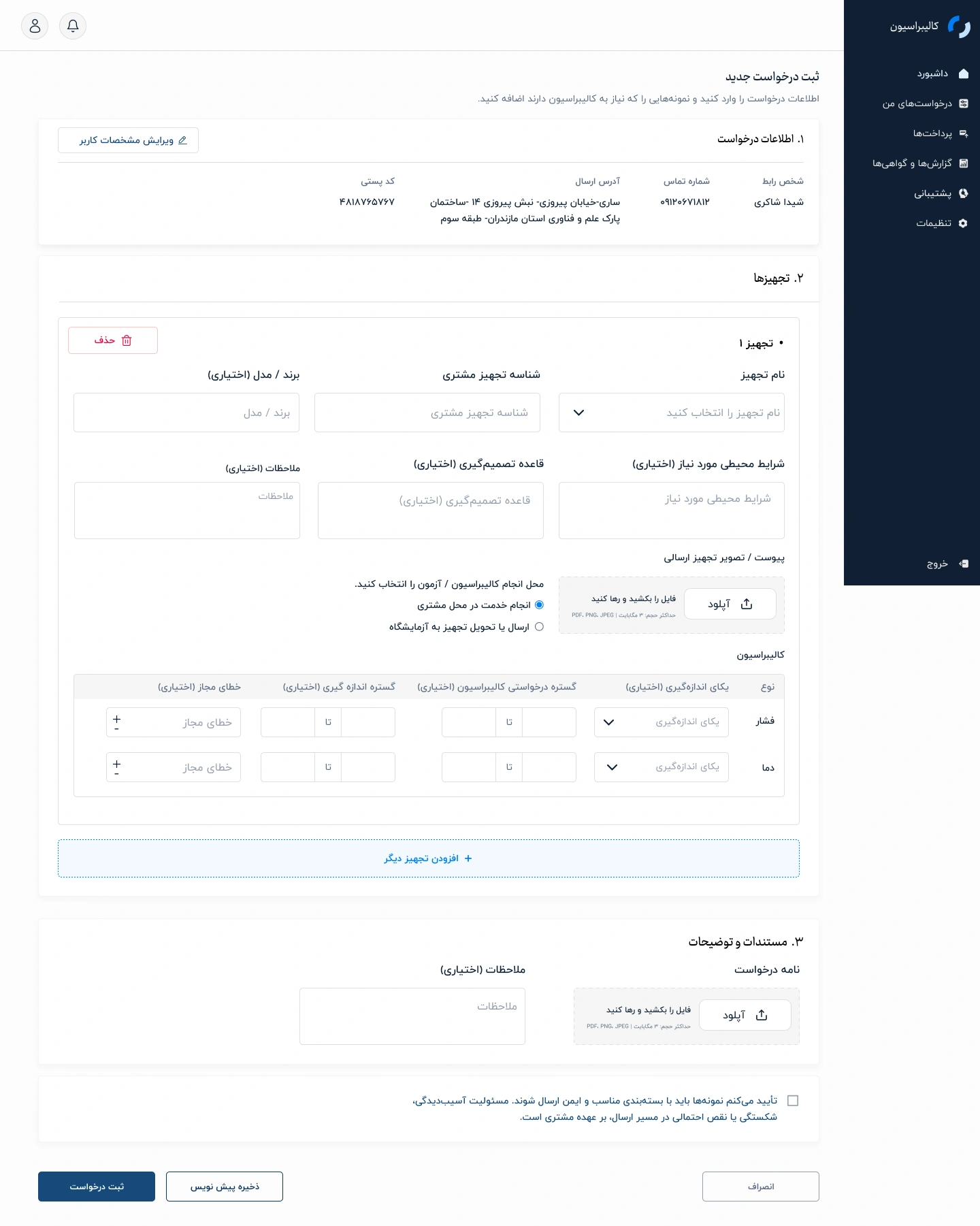
Calibration requests often involve multiple pieces of equipment, each with different technical specifications and testing requirements.
I designed a structured request flow that organizes information into three main sections: request details, equipment information, and supporting documents.
Users can add multiple devices to a single request, specify calibration parameters, upload attachments, choose between on-site service and laboratory delivery, and save their progress as a draft.
This approach keeps complex forms organized while allowing each piece of equipment to be managed independently.
Workflow Design
Bringing Clarity to Every Stage
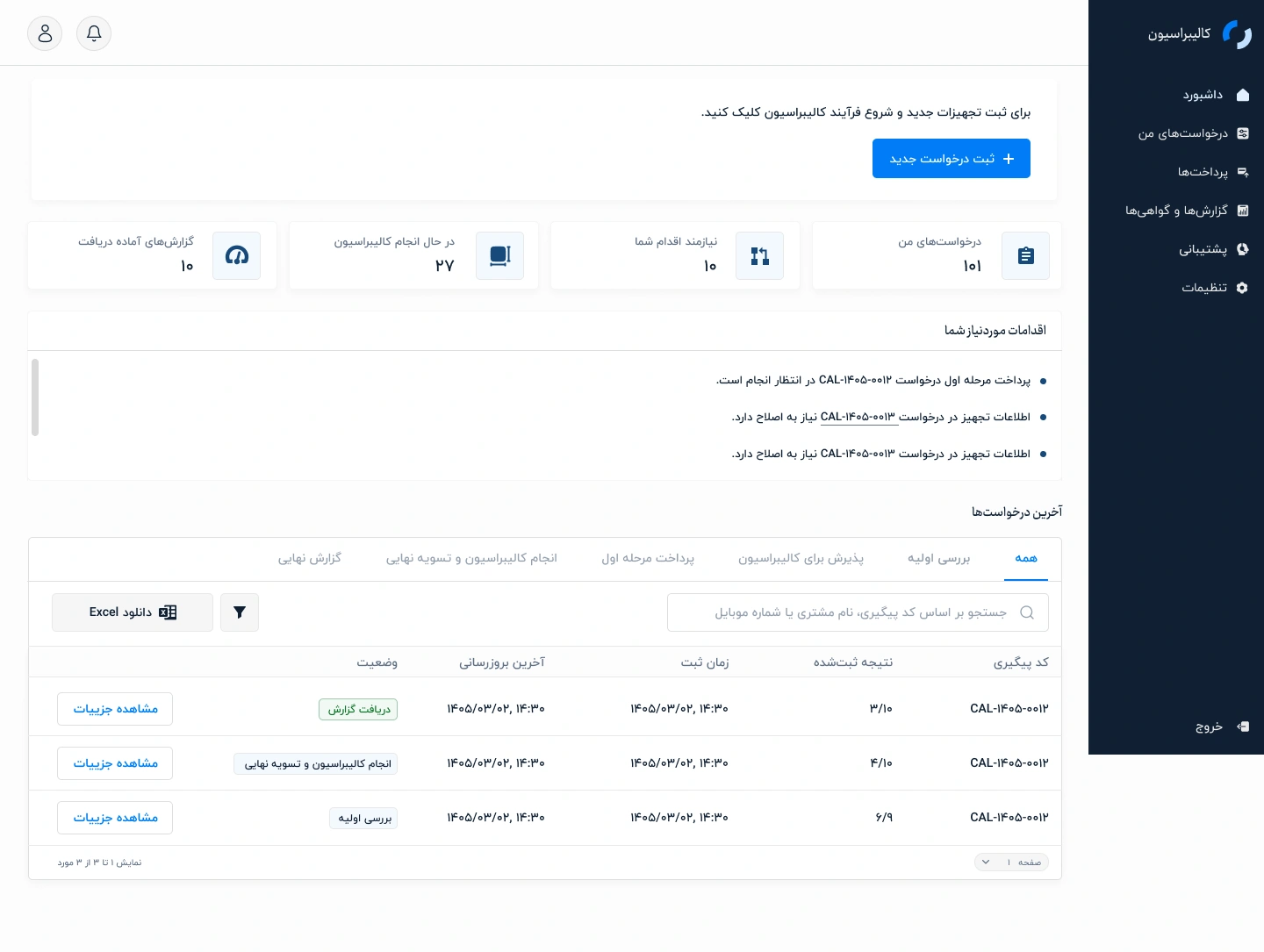
One of the key UX challenges was making a multi-stage operational process understandable to both customers and laboratory experts.
I designed a status-driven workflow that guides requests through initial review, equipment acceptance, pricing, payment, calibration, and final reporting.
A visual progress indicator communicates the current stage, while contextual messages explain what has happened and what action is required next.
Actions are enabled based on workflow conditions, helping prevent users from moving forward before necessary steps are completed.
Equipment Management
One Request, Multiple Independent Journeys
A single calibration request may contain several devices, but not every device follows the same timeline or reaches the same outcome.
To address this, equipment was treated as an independent unit within the larger request.
Laboratory experts can review each device separately, confirm or reject its initial assessment, specify the calibration location, and register individual results.
This structure supports more accurate tracking without forcing every device into an identical process.
Payment Experience
Designing for How Businesses Actually Pay
One important insight was that the person submitting a calibration request is not necessarily responsible for the company’s financial transactions.
A payment flow designed only around the requesting user would not reflect how many businesses operate.
To accommodate this, the platform supports both online payments and payments completed outside the system, which laboratory experts can record manually.
The experience also supports equipment-level pricing, configurable advance payments, discounts, and final settlement.
This flexibility allows the digital workflow to accommodate real business practices rather than forcing users into a rigid payment model.
Result Accessibility
Balancing Payment Rules with Operational Flexibility
Calibration results are generally connected to the payment and settlement process. However, some situations require greater flexibility.
The system allows laboratory experts to make selected equipment results available before the customer completes full payment.
Instead of treating an entire request as a single locked or unlocked unit, result accessibility can be managed at the equipment level.
This design balances financial controls with the practical needs of laboratory operations and customer relationships.
Transparency & Feedback
Keeping Users Informed and in Control
Throughout the experience, I focused on making system behavior predictable and understandable.
Request summaries, equipment statuses, activity histories, confirmation dialogs, and contextual guidance help users understand what is happening at each stage.
The platform also includes payment feedback states, access to reports and certificates, and a post-service feedback experience.
These elements were designed to reduce uncertainty and create a more transparent interaction between customers and the laboratory.
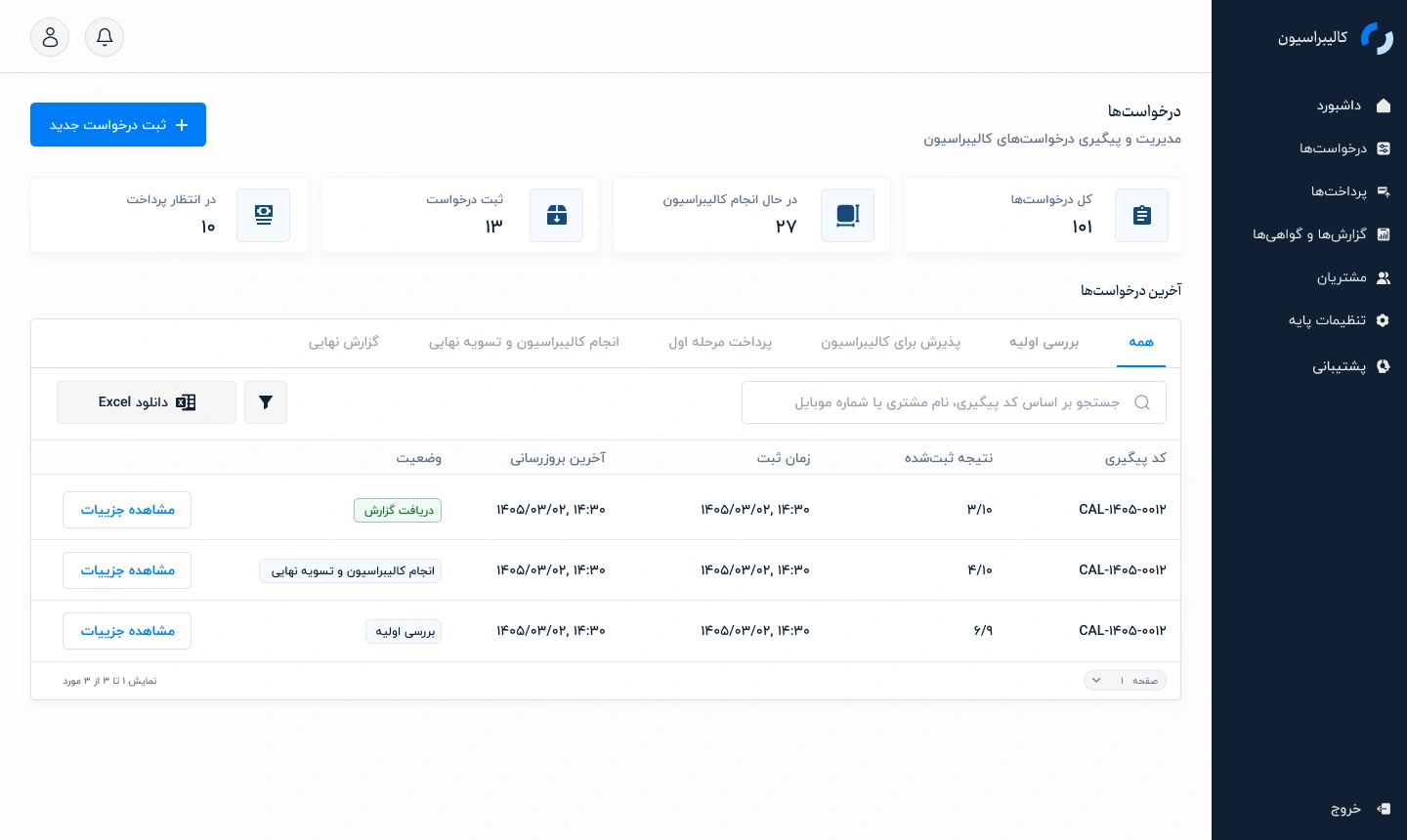
Visual Design
Precision Without Complexity
The visual direction reflects the professional and technical nature of calibration services while keeping the interface approachable.
A structured layout, restrained color palette, clear typography, and consistent interface components establish a cohesive experience across both sides of the platform.
Special attention was given to information hierarchy, form organization, status visibility, and the presentation of complex operational data.
The goal was to make a feature-rich system feel organized rather than overwhelming.
Outcome
From Fragmented Operations to a Connected Experience
The final product brings customer-facing services and laboratory operations into one connected web platform.
Customers can manage calibration requests, follow their progress, complete payments, and access documentation, while laboratory experts have dedicated tools to manage assessments, pricing, equipment statuses, and results.
The platform has been developed and is currently live.
The project demonstrates how thoughtful UX design can turn a complex B2B service workflow into a more structured, transparent, and flexible digital experience.